Why older adults in Canada need advocates: Insights from the Future of Aging Summit
As Canada’s population ages, the need for advocates to represent older adults is becoming more pressing. Only three provinces—British Columbia, Newfoundland and Labrador, and New Brunswick—currently have seniors’ advocates, leaving much of the country without this crucial support. Manitoba is introducing legislation, signalling increasing recognition of the value of a seniors’ advocate role.
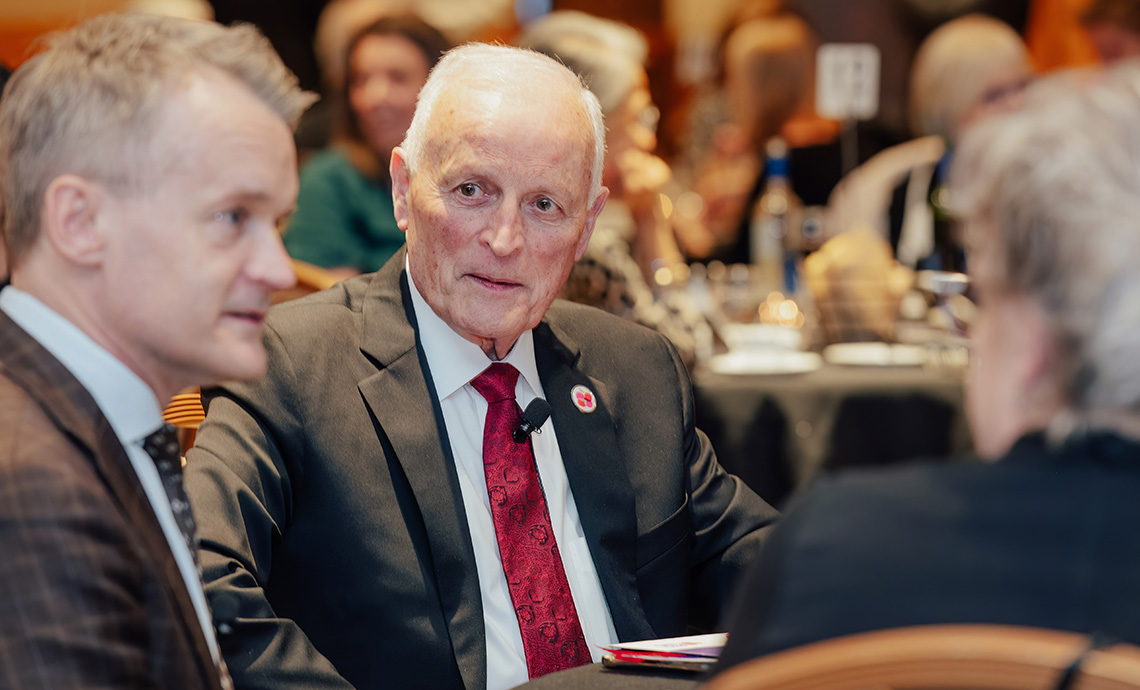
This post is part of a series from the Future of Aging Summit hosted by RTOERO in May 2024. At the summit, experts in seniors’ advocacy discussed why older adults need a strong, independent voice to ensure their rights are respected. This post shares insights from their presentation.

The role of a senior advocate
Seniors’ advocates work to ensure that the needs and concerns of older adults are heard at the highest levels of decision-making. As Susan Walsh, seniors’ advocate for Newfoundland and Labrador, described, her role is to represent seniors on systemic issues.
“The legislation… outlines the powers and duties of my position, and it very clearly states that we are able to represent seniors in the province on issues of a systemic nature.”
Susan Walsh, Senior’s Advocate for Newfoundland and Labrador, at the first Future of Aging Summit in May 2024
Unlike individual case advocacy, Walsh’s work identifies and raises widespread issues with government officials and organizations. Walsh explained how advocates in her office filter through over 1,000 requests yearly for individual advocacy but focus on common problems affecting many seniors.
“As we hear what the issues are, we roll them up, and once we’ve heard from enough people to say, ‘Oh, this seems to be across the board,’ then we can look into the matter.”
Susan Walsh, Senior’s Advocate for Newfoundland and Labrador, at the first Future of Aging Summit in May 2024
Independence: A key factor for effective advocacy
One critical aspect of a senior advocate’s role is independence from government influence. Independence allows Carolyn Cooper, the New Zealand Aged Care Commissioner to push for changes without the pressure of political constraints.
“My role is totally independent, appointed by the governor general, and it means that I can actually say and do what I like—sort of. I have to be respectful of the people who are running [the government], but I can also challenge them. And let me tell you, I do.”
Carolyn Cooper, Aged Care Commissioner from New Zealand, at the first Future of Aging Summit in May 2024
In Canada, Walsh highlighted how this independence is protected by legislation, which ensures her ability to speak out publicly on behalf of seniors.
“I, too, was appointed by the Lieutenant Governor, which means that the decision was made in the House of Assembly by all three government parties. All three parties would have to vote to remove me from the position.”
Susan Walsh, Senior’s Advocate for Newfoundland and Labrador, at the first Future of Aging Summit in May 2024
This structure allows Walsh to advocate for seniors even when her views might conflict with government priorities.
Why senior advocates are needed across Canada
As Canada’s population ages, gaps in services and support are becoming more evident. Many older adults encounter barriers when accessing essential services, highlighting the need for a better-equipped system to support their well-being and independence. Carole Osero-Ageng’o, Global Initiatives Lead for HelpAge International, spoke about the universal nature of these challenges.
“An older person in Canada, an older person in Indonesia, an older person in Kenya are all the same—it’s just the context of our geographies that separates us.”
Carole Osero-Ageng’o, Global Initiatives Lead for HelpAge International, at the first Future of Aging Summit in 2024
Walsh echoed this need for nationwide advocacy in Canada, noting the gaps in current services.
“Older adults in every province deserve the same level of protection and advocacy. It shouldn’t depend on where they live.”
Susan Walsh, Senior’s Advocate for Newfoundland and Labrador, at the first Future of Aging Summit in May 2024
How senior advocates can affect change
Senior advocates use various tools and strategies to drive systemic change for older adults. These mechanisms range from formal powers granted by legislation to grassroots advocacy efforts that amplify seniors’ voices on important issues.
Legislative authority and influence
Having legislative backing allows seniors’ advocates to conduct research, review policies, and make formal recommendations to governments. Once a systemic issue is identified, the advocate office can raise the problems with government officials, proposing changes to laws, services, and policies. Advocates can demand accountability by issuing public reports, influencing the legislative agenda, and ensuring transparency in how senior services are managed.
Resources
Legislation should also outline the office’s resourcing. This work can’t happen without staff and a budget.
Collaborative research and policy development
Advocates can collaborate with community organizations and researchers to generate evidence-based solutions. Their recommendations must be research-backed to ensure governments implement meaningful reforms.
Public campaigns and stakeholder engagement
Advocates also engage in public awareness campaigns to build support for senior-friendly policies. By working with stakeholders across sectors, they can create broad coalitions to champion changes that benefit older adults. Senior advocates can unify diverse voices across regions and cultures, recognizing that while the contexts of older adults may differ, their fundamental needs remain the same globally.
Systemic challenges faced by older adults
Several unique issues highlight the need for a senior advocate role:
- Access to appropriate health care: Older adults often face delays or barriers in accessing specialized care, home care services, and geriatric assessments.
- Elder abuse: Seniors may experience physical, emotional, or financial abuse, and they need someone to advocate for protection and justice.
- Housing challenges: Safe, affordable housing can be scarce for seniors, especially those with fixed incomes or disabilities.
- Social isolation: Many seniors face loneliness, especially in rural areas, which advocates can help address.
- Systemic policy gaps: Advocates can identify broad policy failures affecting seniors’ quality of life, such as gaps in pension programs, transportation, or age-related discrimination.
These issues require specialized attention to uphold seniors’ rights and well-being across various sectors.
Access the complete panel discussion on RTOERO Learning
RTOERO members can watch a recording of this and other presentations from the Future of Aging Summit on RTOERO Learning, our online member learning community.
Senior advocates play a crucial role in representing the needs and concerns of older adults in Canada. Their independence and ability to challenge government policies are essential in ensuring seniors receive the care and services they deserve. With Manitoba on the verge of creating its seniors’ advocate, the next step is for all provinces to recognize the importance of this role. As the Future of Aging Summit experts emphasized, having a robust and independent advocate for seniors is not a luxury—it’s a necessity.
RTOERO advocates for the creation of a seniors advocate role when meeting with government officials from provinces that don’t yet have one. This concrete step can have a notable impact on the well-being of older adults by bringing systemic issues to the surface and holding governments accountable.